

Machane Yehuda Market: A Visitor's Guide from the Neighbors
Machane Yehuda Market (also spelled Mahane Yehuda, and known to everyone in Jerusalem as "the shuk") is the city's main market: more than 270 stalls and shops between Jaffa Road and Agripas Street. By day it sells vegetables, spices, pastries and halva. In the evening it turns into a district of bars and restaurants.
Our base is at 1 Agripas Street, right next to the market, and our cocktail workshops grew out of its atmosphere. Here is what is worth knowing before you visit, with our own video recommendations.
The market at a glance
Where
In the center of Jerusalem, between Jaffa Road and Agripas Street, next to the Nachlaot neighborhood.
Opening hours
Sunday to Thursday from about 8:00 to 19:00. Friday from the morning until early afternoon, about two hours before Shabbat begins. On Saturday and Jewish holidays the stalls are closed.
In the evening
When the stalls close, the market's restaurants and bars stay open until after midnight. They also open on Saturday night.
How long
About two hours for a relaxed walk with a few food stops. With a restaurant or the bars, half a day.
Hours are correct for November 2026. Every business sets its own hours, and they change on holidays and holiday eves.
The best time to visit
- A weekday morning - The calmest time. From about 9:30 the produce is laid out, and the vendors have time to talk and to let you taste.
- Thursday night - The busiest and happiest night of the week. The bars are full and there is music in every alley.
- Friday morning - Jerusalem shops for Shabbat. Crowded and loud, with challah, flowers and an atmosphere no other day has. The market closes early, so come before noon, and preferably not by car.
- Saturday night - The stalls are closed, but after Shabbat ends most of the restaurants and bars open.
Jerusalem is cooler than the coast, and rainy in winter. Part of the market is covered and part is open, so bring a coat in winter and a light layer for summer evenings. For an up-to-date forecast, see the Israel Meteorological Service.
Places worth a stop: Idan's video picks
Idan Mizrahi, the owner of Cocktail Israel, is a Jerusalemite. In his video series "Places worth visiting in Jerusalem" he goes from place to place in the market, tastes and gives a score. These are the first three parts. The videos are in Hebrew, and the quotes below are translated.
Pizini (פיצ'יני): Neapolitan pizza in the Iraqi Market
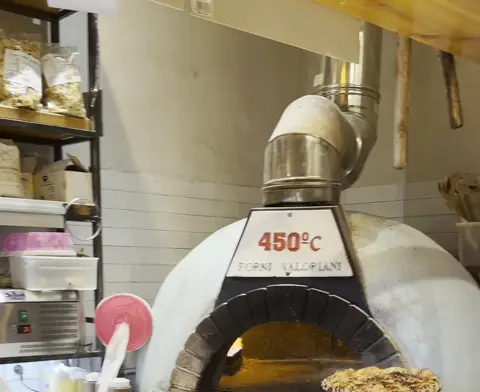
Neapolitan pizza from a wood-fired oven, on dough that rises for 72 hours. The place is dairy and kosher, sits in the half-covered Iraqi Market, and is a nice spot to sit down with a beer. Idan's verdict: "It's not the tastiest pizza I've had and it's not the cheapest. It's simply different and special." His score: 9 to 9.5 out of 10.
Empanado (אמפנדו): empanadas on the main street of the market
A small, modest place with a wide choice of fillings, including vegan ones and a few surprises. Kosher, and good value. Idan: "Some of the tastiest empanadas I've eaten in my life, and I've eaten them all over the world." His score: 9.5 out of 10.
Jerusalem Desserts (קינוחי ירושלים): fruit-shaped desserts, next to the knafeh shops
Desserts that look like fruit, each with a different flavor. Idan arrived skeptical and left convinced. His tip: decide first what you like in a dessert (coffee, sweet, fruity or sour) and only then order. Kosher. His score: 9 out of 10.
New parts of the series go up first on Idan's Instagram
Getting there and parking
Light rail
The Mahane Yehuda stop on Jaffa Road is right at the entrance to the market. It is a short ride from the Central Bus Station and from the city center, and it is the easiest way to arrive.
Bus
Many lines stop on Agripas Street, on the other side of the market. Jaffa Road itself is for the light rail only.
Car
There are paid parking lots near the market, including the Shukanyon lot at 88 Agripas Street, at the western end. On Thursday afternoon and Friday morning the lots fill up.
On foot
The market is within walking distance of the city center and of the Nachlaot neighborhood.
How the market is laid out, and how it began
The market has two main streets running from Jaffa Road down to Agripas Street: Machane Yehuda Street, which is the open-air market, and Etz HaChaim Street, which is the covered market. Small alleys named after fruits and nuts connect them: HaTapuach (apple), HaAgas (pear), HaShezif (plum), HaAfarsek (peach), HaTut (strawberry), HaShaked (almond) and HaEgoz (walnut). To one side is the Iraqi Market, an old, half-covered corner.
The market began at the end of the 19th century. Farmers from the villages around Jerusalem brought their produce to sell beside Jaffa Road, on an empty lot that belonged to the Valero family. At first it was called the Valero Market, and only later took the name of the neighborhood next door, Machane Yehuda.
Under the British Mandate the sheds and wooden stalls were replaced by permanent shops. In 1931 another market opened beside them, which over the years filled with merchants who had come from Iraq, and so it is called the Iraqi Market. In recent years restaurants, cafes and bars have opened among the veteran stalls, and the market has become a place to go out as well.
What to eat in Machane Yehuda Market
Come hungry. A few things to look for:
- Pastries - Burekas, warm rugelach and Friday challah from the veteran bakeries.
- Halva and tahini - Halva in dozens of flavors, cut from a large block, with a taste before you buy.
- Home cooking - Kubbeh soup, stuffed vegetables and slow-cooked stews in the market's old workers' restaurants.
- Jerusalem mixed grill - Me'orav Yerushalmi, the dish that was born here, in the grill restaurants of Agripas Street.
- Sweets - Hot knafeh, baklava and special desserts.
- Fresh juices - Fruit squeezed on the spot, and a few market drinks you will not find anywhere else.
The market is also a walk between kitchens, all within a few alleys:
- Kurdish and Iraqi - Kubbeh soup and stews that simmer for hours.
- Yemenite - Jachnun and malawach, made in front of you.
- Georgian - Hot khachapuri straight from the oven.
- Moroccan - Mufleta, and not only at Mimouna.
- From around the world - Argentinian empanadas, Neapolitan pizza, fish and chips and Japanese food.
Share dishes and taste from many places, rather than filling up at the first stop.
The market at night
Bars between the stalls
In the evening the vegetable stalls close, and bars and restaurants open in the alleys, with tables outside.
The paintings on the shutters
When the shops are closed you can see the portraits that the artist Solomon Souza painted on their shutters. It is a gallery you only see in the evening and on Shabbat.
Thursday night
The busiest night of the week. If you prefer it quieter, come on a midweek evening.
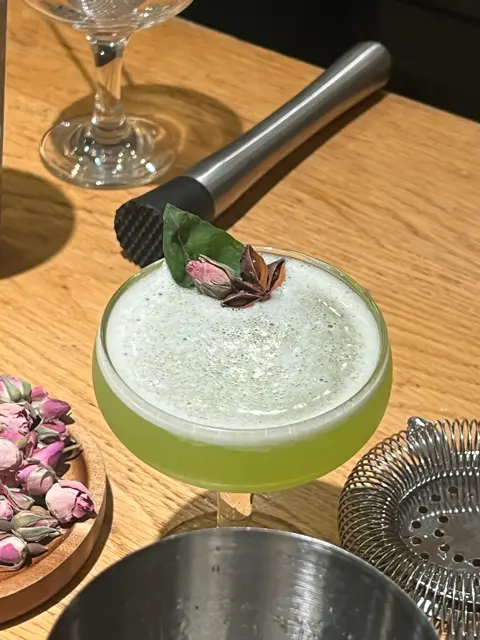
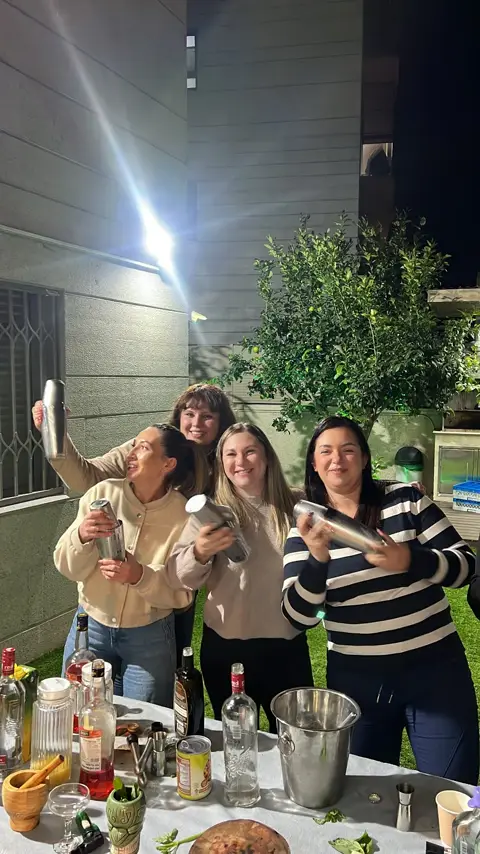
We bring this atmosphere to events all over Israel: Machane Yehuda-style cocktail workshops
What to take home from the market
Halva and tahini
Some shops grind the sesame on millstones in front of you. Ask to taste before you choose.
Spices and blends
Sold by weight, as much as you need. Ask the vendor what suits the food you cook.
Coffee
Roasters that grind the beans on the spot, to match the way you make coffee at home.
Nuts and dried fruit
Roasted on site and sold by weight.
Cheese, olives and pickles
At the delis and the veteran pickle stalls. Here too, you can taste first.
Challah and rugelach
For Shabbat. On Friday morning the lines are long, so come early.
A few small tips
- Comfortable shoes - You will walk a lot, and the market floor is not always dry.
- Some cash - Most places take cards, but cash is still easier at the small stalls.
- With children or a stroller - A weekday morning is best, when there is room to move.
- Restrooms - There are public restrooms inside the market.
- Kosher - Each business has its own kosher supervision. If you keep kosher, look for the certificate at the entrance or ask.
Want to see the market with someone from the inside?
You can walk around the market on your own, or you can do it with people who know the vendors by name. We run food tasting tours and guided tours of Machane Yehuda Market for groups: friends, families, company teams and delegations. In English or in Hebrew.
Groups and companies can combine the tour with a team building cocktail workshop, with one team handling both.
Machane Yehuda Market: frequently asked questions
What are the opening hours of Machane Yehuda Market?
Sunday to Thursday the stalls are open from about 8:00 to 19:00, and the restaurants and bars carry on until after midnight. On Friday the market is open from the morning until early afternoon, about two hours before Shabbat begins. Every business sets its own hours, and they change on holidays and holiday eves.
Is Machane Yehuda Market open on Saturday?
No. The stalls are closed on Shabbat (Friday afternoon to Saturday night) and on Jewish holidays. On Saturday night, after Shabbat ends, most of the restaurants and bars in the market open.
When is the market busiest, and when is it quiet?
It is busiest on Friday from the morning until noon, when Jerusalem shops for Shabbat, and on Thursday night, when the bars fill up. It is quietest on weekday mornings.
How do I get to Machane Yehuda Market?
Take the light rail to the Mahane Yehuda stop on Jaffa Road, right at the entrance to the market. It is a short ride from the Jerusalem Central Bus Station and from the city center. Many buses stop on Agripas Street, on the other side of the market.
Where can I park near the market?
There are paid parking lots near the market, including the Shukanyon lot at 88 Agripas Street, at the western end of the market. On Thursday afternoon and Friday morning the lots fill up, so the light rail is the easier way in.
How much time do I need for a visit?
About two hours is enough for a relaxed walk with a few food stops. If you want to sit down in a restaurant or stay for the bars in the evening, plan half a day.
Is the food in Machane Yehuda Market kosher?
Each business has its own kosher supervision. If you keep kosher, look for the certificate at the entrance or ask on the spot.
Is it Machane Yehuda or Mahane Yehuda?
Both. It is the same Hebrew name spelled two ways in English. The market is named after the neighborhood next to it. Locals simply call it "the shuk" (the market) or "Machneyuda".
Are there guided tours of Machane Yehuda Market in English?
Yes. We run food tasting tours and guided tours of the market for groups, in English or in Hebrew. All the details about the tours
Planning a group tour of Machane Yehuda Market?
Tell us how many you are and when you are coming, and we will get back to you with an offer.
Message Idan on WhatsApp